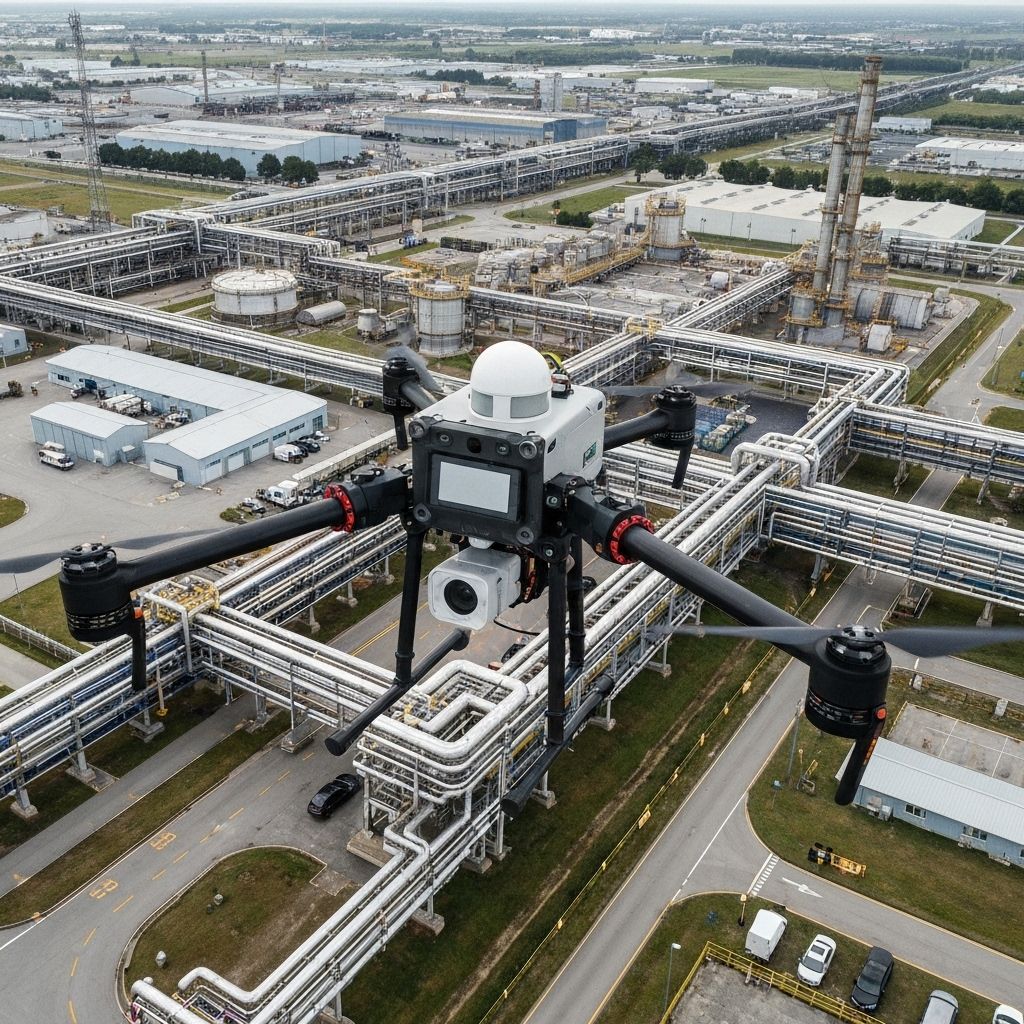
Drone technology has revolutionized roof inspections for large commercial and institutional facilities. By combining aerial thermal imaging with high-resolution photography, drones provide comprehensive roof assessments without the cost, risk, and disruption of traditional inspection methods.
Why Drones for Roof Inspections
Safety
Traditional roof inspections require personnel to access potentially dangerous roof surfaces. Risks include:
- Falls from height
- Unstable roof surfaces
- Extreme weather exposure
- Hazardous materials (asbestos, chemicals)
Drones eliminate these risks by keeping inspectors safely on the ground.
Efficiency
Drone inspections are dramatically faster:
- Traditional inspection: 4-8 hours for large roof
- Drone inspection: 30-90 minutes for same roof
This efficiency reduces labor costs and minimizes disruption to building operations.
Comprehensive Coverage
Drones can access areas difficult or impossible for human inspectors:
- Steep slopes
- Fragile roof surfaces
- Areas above occupied spaces
- Roofs with limited access points
Documentation Quality
Drones capture high-resolution imagery and thermal data that provides:
- Complete visual record of roof condition
- Precise location data for problems
- Before/after comparison capability
- Shareable digital assets for stakeholders
Drone Inspection Technology
Visual Cameras
High-resolution cameras (20+ megapixels) capture detailed images showing:
- Membrane condition and damage
- Flashing details
- Drainage systems
- Penetrations and equipment
- Edge conditions
Thermal Imaging
Infrared cameras mounted on drones detect:
- Wet insulation (appears cooler)
- Membrane delamination
- Air leakage points
- Thermal bridging
Thermal imaging is most effective during temperature differentials—early morning or evening flights often provide best results.
LiDAR (Advanced Applications)
Laser scanning creates 3D models showing:
- Roof topography
- Drainage patterns
- Ponding water locations
- Structural deflection
Inspection Process
Pre-Flight Planning
- Site Assessment: Review building plans, identify hazards, plan flight path
- Regulatory Compliance: Verify airspace restrictions, obtain necessary permits
- Weather Check: Confirm suitable conditions (wind, precipitation, visibility)
- Safety Briefing: Coordinate with building occupants, establish safety zones
Flight Operations
Professional drone inspections follow systematic patterns:
- Grid pattern for complete coverage
- Multiple altitudes for different perspectives
- Oblique angles for edge and flashing details
- Thermal and visual imaging of same areas
Flight time: typically 20-40 minutes per roof section.
Data Processing
- Image Review: Analyze thousands of images for problems
- Thermal Analysis: Identify moisture patterns and anomalies
- Mapping: Create annotated roof plans showing problem locations
- Reporting: Comprehensive report with findings and recommendations
What Drones Can Detect
Membrane Damage
- Punctures and tears
- Seam failures
- Blistering
- UV degradation
- Shrinkage
Moisture Problems
- Wet insulation
- Trapped moisture
- Leak locations
- Drainage issues
Structural Issues
- Deck deflection
- Ponding water
- Sagging areas
- Settlement
Equipment and Penetrations
- HVAC unit condition
- Flashing failures
- Pipe penetration problems
- Skylight condition
Ideal Applications
Large Commercial Roofs
Shopping centers, warehouses, manufacturing facilities—any roof over 50,000 sq ft benefits significantly from drone inspection efficiency.
Institutional Facilities
Schools, hospitals, government buildings with multiple roof levels and complex configurations.
High-Rise Buildings
Difficult-to-access roofs on tall buildings where traditional access requires expensive equipment.
Historic Buildings
Fragile roof surfaces where foot traffic could cause damage.
Post-Storm Assessment
Rapid damage assessment after severe weather without risking inspector safety.
Limitations and Considerations
Weather Dependency
Drones cannot fly in:
- High winds (typically >25 mph)
- Rain or snow
- Low visibility
- Extreme temperatures
Regulatory Requirements
Commercial drone operations require:
- Licensed pilots (Transport Canada certification)
- Registered aircraft
- Airspace authorization
- Insurance coverage
Not a Complete Replacement
Drones excel at overview assessment but cannot:
- Perform invasive testing
- Assess interior conditions
- Test membrane adhesion
- Evaluate structural capacity
Comprehensive assessments often combine drone surveys with targeted physical inspections.
Cost Comparison
Traditional Inspection
- Labor: 2 technicians × 8 hours = $3,000
- Equipment: Lift rental = $1,500
- Safety: Fall protection, insurance = $500
- Total: $5,000
Drone Inspection
- Flight operations: 2 hours = $1,500
- Data processing and reporting: $1,000
- Total: $2,500
Savings: 50% cost reduction plus faster turnaround and better documentation.
Selecting a Drone Inspection Provider
Essential Qualifications
- Transport Canada Advanced Pilot Certification
- Thermography certification (Level I minimum)
- Roofing industry experience
- Professional liability insurance
- Professional-grade equipment
Questions to Ask
- How many similar roofs have you inspected?
- What thermal camera resolution do you use?
- How do you process and analyze thermal data?
- What deliverables are included?
- What is your turnaround time?
- Can you provide references?
Integration with Maintenance Programs
Annual Inspections
Drone surveys provide cost-effective annual roof assessments, tracking condition changes over time.
Post-Storm Assessment
Rapid damage assessment after severe weather enables quick insurance claims and repair planning.
Capital Planning
Comprehensive condition data supports accurate budget forecasting and replacement timing.
Warranty Compliance
Regular documented inspections maintain warranty requirements while minimizing cost.
The Future of Drone Inspections
Technology continues advancing:
- AI Analysis: Automated defect detection and classification
- Autonomous Flight: Pre-programmed inspection routes
- Real-Time Reporting: Instant problem identification during flight
- Multi-Sensor Integration: Combining thermal, visual, and LiDAR data
Drone technology has transformed roof inspections from expensive, risky, time-consuming processes into efficient, safe, comprehensive assessments. For facility managers responsible for large roof portfolios, drones represent a paradigm shift in how roof condition is monitored and maintained.
Need Professional Leak Detection?
Our expert team uses advanced thermal imaging and moisture detection technology to protect your facility.