Parkade Waterproofing: Common Failures and Solutions
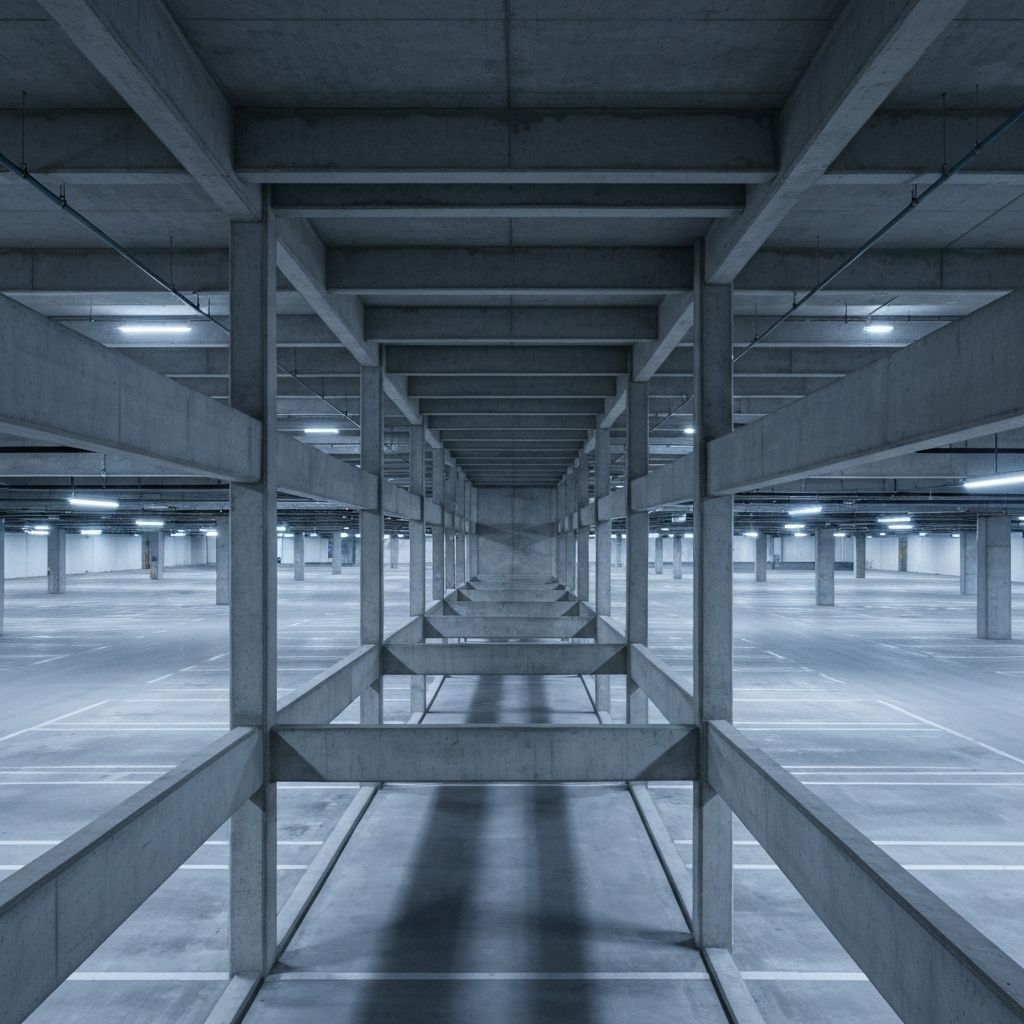
Underground parkades represent one of the most challenging waterproofing applications in building construction. Understanding common failure modes and implementing proactive detection strategies can prevent catastrophic damage and extend parkade service life.
Why Parkades Are Vulnerable
Underground parkades face a perfect storm of conditions that challenge waterproofing systems:
- Hydrostatic Pressure: Groundwater constantly pushes against waterproofing membranes
- Structural Movement: Concrete shrinkage and thermal expansion create stress on waterproofing
- Traffic Loading: Vehicle weight and vibration accelerate deterioration
- De-icing Salts: Chlorides from vehicles attack concrete and reinforcing steel
- Drainage Challenges: Inadequate drainage increases water exposure
Common Waterproofing Systems
Sheet Membrane Systems
Rubberized asphalt or PVC membranes applied to the exterior of parkade walls and under slabs. Advantages: proven performance, good crack-bridging ability. Challenges: installation quality critical, difficult to repair.
Liquid-Applied Membranes
Spray or roller-applied waterproofing that forms a seamless barrier. Advantages: conforms to complex shapes, no seams. Challenges: thickness control, application conditions critical.
Crystalline Waterproofing
Admixtures or coatings that react with concrete to form waterproof crystals. Advantages: self-healing properties, can be applied to existing structures. Challenges: requires proper concrete quality, limited crack-bridging.
Drainage Systems
Drainage mats, weeping tiles, and sump systems that manage water rather than just blocking it. Essential complement to waterproofing membranes.
Common Failure Modes
1. Construction Joint Leaks
The junction between walls and slabs, or between concrete pours, represents the most common leak location. Waterproofing transitions at these joints are vulnerable to movement and installation defects.
Warning Signs: Water seepage at wall-floor junctions, efflorescence along construction joints.
2. Membrane Punctures
During construction, waterproofing membranes can be damaged by reinforcing steel, formwork, or construction traffic before protective layers are installed.
Warning Signs: Isolated wet spots on walls or ceilings, often appearing after heavy rain.
3. Drainage System Failures
Clogged drains, crushed drainage pipes, or inadequate drainage capacity allow water to accumulate and overwhelm waterproofing systems.
Warning Signs: Standing water, increased leakage during wet weather, hydrostatic pressure damage.
4. Concrete Deterioration
Chloride penetration from de-icing salts causes reinforcing steel corrosion. Corroding steel expands, cracking concrete and compromising waterproofing.
Warning Signs: Concrete spalling, rust staining, exposed rebar, progressive cracking.
5. Expansion Joint Failures
Expansion joints accommodate building movement but require specialized waterproofing details. Joint sealants deteriorate over time, creating leak paths.
Warning Signs: Water seepage at expansion joints, failed sealants, joint displacement.
Detection and Assessment Methods
Visual Inspection
Systematic survey of all parkade surfaces, documenting:
- Active leaks and water staining
- Concrete condition and cracking
- Efflorescence and mineral deposits
- Drainage system function
- Joint condition
Thermal Imaging
Infrared cameras identify hidden moisture in walls and ceilings, temperature differences indicating water infiltration paths.
Concrete Testing
- Chloride Testing: Measures salt penetration depth
- Carbonation Testing: Assesses concrete degradation
- Core Sampling: Evaluates concrete quality and reinforcement condition
Water Testing
Controlled water application to specific areas identifies leak locations and tests repair effectiveness.
Repair Strategies
Localized Repairs
For isolated leaks:
- Injection grouting to seal cracks and joints
- Localized membrane patches
- Drainage improvements
- Joint re-sealing
Cost: $5,000-$50,000 depending on extent and access.
Comprehensive Rehabilitation
For widespread problems:
- Complete membrane replacement
- Concrete restoration
- Drainage system upgrade
- Traffic coating replacement
Cost: $150-$300 per square meter, often $2-5 million for typical condo parkade.
Preventive Maintenance Program
Proactive programs extend parkade life and minimize repair costs:
Annual Inspections
- Visual survey of all surfaces
- Drainage system cleaning and testing
- Joint sealant inspection
- Documentation with photos and reports
Bi-Annual Maintenance
- Drain cleaning
- Minor crack sealing
- Joint sealant touch-up
- Concrete cleaning
Five-Year Assessment
- Comprehensive condition assessment
- Concrete testing
- Thermal imaging survey
- Long-term capital planning
Cost Considerations
Preventive Maintenance
Annual program: $10,000-$25,000 for typical 200-stall parkade.
Early Intervention
Addressing problems in first 10 years: $100,000-$500,000.
Deferred Maintenance
Major rehabilitation after 20-30 years: $2,000,000-$5,000,000.
The cost ratio is clear: $1 spent on preventive maintenance saves $10-20 in future repairs.
Strata Council Considerations
For condominium buildings:
- Establish depreciation report requirements
- Fund contingency reserve adequately
- Engage qualified professionals for assessments
- Plan major work during optimal weather
- Communicate with owners about timelines and costs
- Consider special levies early rather than deferring work
Selecting Qualified Contractors
Parkade waterproofing requires specialized expertise:
- Proven experience with similar projects
- Manufacturer certifications for specified systems
- Comprehensive warranties (10-15 years minimum)
- Detailed methodology and quality control
- References from similar buildings
Avoid selecting based primarily on price. Quality installation is critical for long-term performance.
Underground parkades represent a significant investment and liability. Proactive moisture detection, regular maintenance, and timely repairs protect this investment and prevent the catastrophic failures that plague many aging buildings.
Need Professional Leak Detection?
Our expert team uses advanced thermal imaging and moisture detection technology to protect your facility.