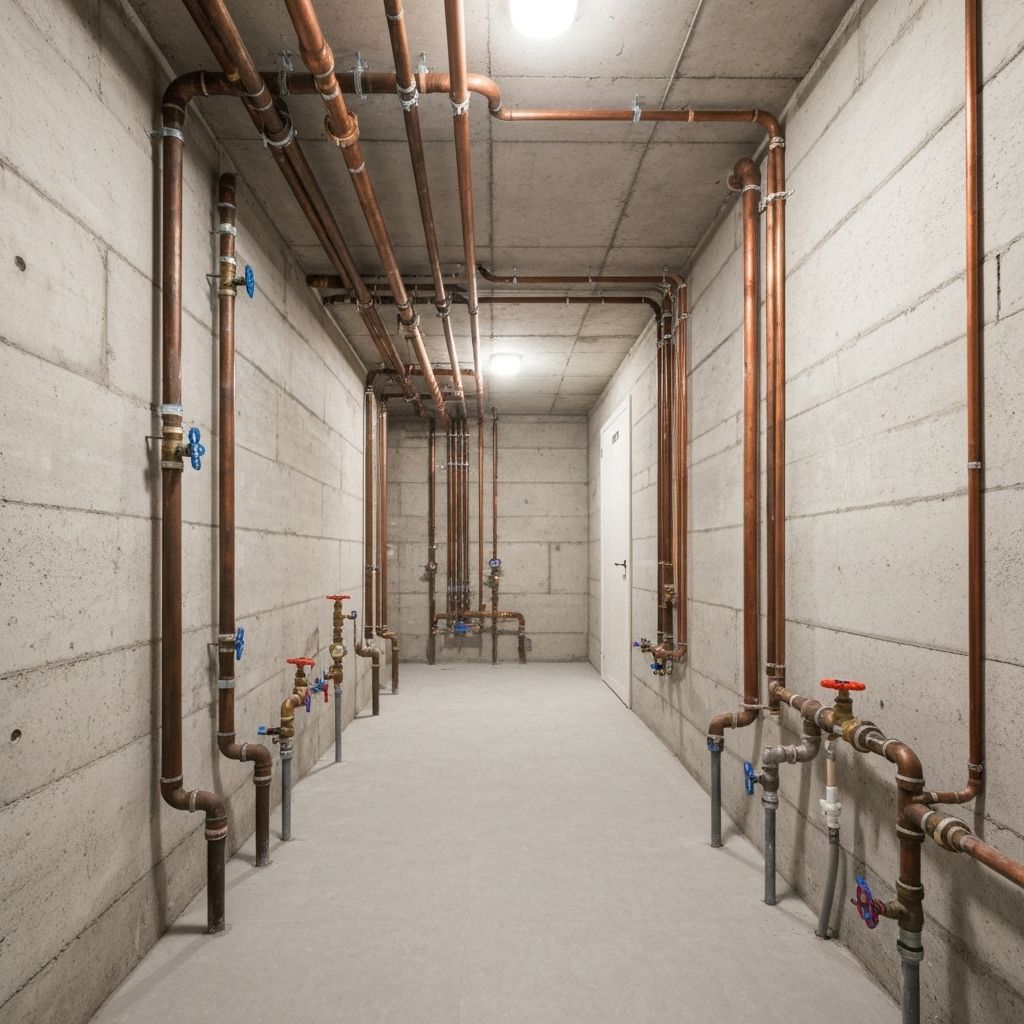
Acoustic leak detection technology allows us to pinpoint leaks in pressurized water systems without invasive investigation. By listening to the unique sound signature of escaping water, trained technicians can locate leaks hidden behind walls, under floors, and underground.
How Acoustic Detection Works
When water escapes from a pressurized pipe, it creates vibrations and sound waves that travel through the pipe material and surrounding structures. These sounds are typically in the frequency range of 100-1000 Hz, often beyond normal human hearing range.
Professional acoustic leak detection equipment amplifies these sounds and filters out background noise, allowing technicians to identify and locate leaks with remarkable precision—often within inches of the actual leak location.
Types of Acoustic Equipment
Ground Microphones
Highly sensitive contact microphones placed on the ground surface detect leak sounds transmitted through soil and pavement. Used primarily for underground water mains and service lines.
Listening Sticks
Handheld devices with contact sensors placed directly on pipes, valves, and fixtures. Ideal for accessible plumbing systems in mechanical rooms and crawl spaces.
Correlating Leak Detectors
Advanced systems using two sensors placed at different points on a pipe. By analyzing the time difference between when leak sounds reach each sensor, the system calculates the exact leak location. Accuracy: typically within 12 inches.
Acoustic Loggers
Battery-powered devices attached to pipes that record sound patterns overnight when background noise is minimal. Data is analyzed to identify potential leak locations for further investigation.
Ideal Applications
Acoustic detection excels in specific scenarios:
Pressurized Systems
Domestic water supply, fire suppression systems, and hydronic heating systems all maintain pressure that creates detectable leak sounds.
Metallic Pipes
Copper, steel, and cast iron pipes transmit sound waves effectively. Plastic pipes (PVC, PEX) transmit sound less efficiently but can still be detected with proper equipment.
Continuous Leaks
Acoustic detection works best on leaks that flow continuously. Intermittent leaks (like those from fixtures) are more challenging to locate.
Underground Leaks
Particularly valuable for locating leaks in underground water mains where visual inspection is impossible without excavation.
Limitations and Challenges
Background Noise
Traffic, HVAC systems, and other building operations create noise that can mask leak sounds. Best results often come from testing during quiet periods—nights or weekends.
Pipe Material
Plastic pipes dampen sound transmission, reducing detection range. Older, corroded pipes may also transmit sound poorly.
Leak Size
Very small leaks may not generate sufficient sound for detection. Very large leaks may create turbulent flow that's difficult to pinpoint.
System Pressure
Low system pressure reduces leak sound intensity. Acoustic detection works best with normal operating pressure (40-80 PSI).
The Detection Process
Step 1: System Assessment
Review building plans, identify pipe locations, and understand system configuration. Determine optimal sensor placement points.
Step 2: Initial Survey
Use listening sticks or ground microphones to survey the system and identify areas with suspicious sounds.
Step 3: Correlation Analysis
Deploy correlating equipment at strategic points to calculate precise leak locations.
Step 4: Verification
Use complementary technologies—thermal imaging, moisture meters—to confirm leak location before any invasive work.
Step 5: Documentation
Provide detailed reports with leak locations marked on building plans, sound recordings, and repair recommendations.
Combining Technologies
Acoustic detection works best as part of a comprehensive approach:
Thermal Imaging: Identifies moisture patterns and temperature anomalies that guide acoustic investigation.
Moisture Meters: Confirm the presence of water at suspected leak locations.
Pressure Testing: Isolates sections of piping to narrow down leak locations.
Video Inspection: Cameras inserted into pipes can visually confirm leaks once located acoustically.
Cost-Benefit Analysis
Acoustic leak detection typically costs $2,000-$5,000 for a comprehensive building survey. Compare this to the cost of:
- Exploratory demolition: $5,000-$15,000
- Water damage from undetected leaks: $10,000-$100,000+
- Increased water bills: $500-$2,000 monthly for significant leaks
The technology pays for itself by avoiding unnecessary demolition and catching leaks before they cause major damage.
When to Use Acoustic Detection
Consider acoustic leak detection when:
- Water bills show unexplained increases
- Water meter indicates continuous flow when fixtures are off
- Moisture is detected but the source is unclear
- Previous leak repairs haven't solved the problem
- Underground leaks are suspected
Choosing a Qualified Provider
Effective acoustic leak detection requires:
- Professional-grade equipment ($15,000-$50,000 investment)
- Extensive training and experience
- Understanding of building systems and acoustics
- Patience and systematic methodology
Ask potential providers about their equipment, training, and success rate. Request references from similar facilities.
Acoustic leak detection represents a powerful, non-invasive tool for protecting buildings from hidden water damage. When performed by qualified professionals with proper equipment, it provides accurate, cost-effective leak location that minimizes disruption and repair costs.
Need Professional Leak Detection?
Our expert team uses advanced thermal imaging and moisture detection technology to protect your facility.